Have you ever looked at a fluffy, round panda rolling down a grassy hill and thought, “I absolutely need one of those in my living room”? You are definitely not alone in that feeling. Their big black eye patches, clumsy antics, and gentle bamboo-munching habits make them look like the ultimate cuddle buddies. It is very easy to see why so many people search the internet to find out how to bring one of these iconic black-and-white bears home.
However, the reality of trying to buy a panda bear is incredibly complicated. While we might dream of sharing our couch with a real-life teddy bear, the laws and logistics surrounding these animals tell a very different story. Before you start planning a giant bamboo garden in your backyard, let’s dive deep into the fascinating, strictly regulated world of these amazing creatures to see what it really takes to protect them.
Can You Buy a Panda Bear Legally?
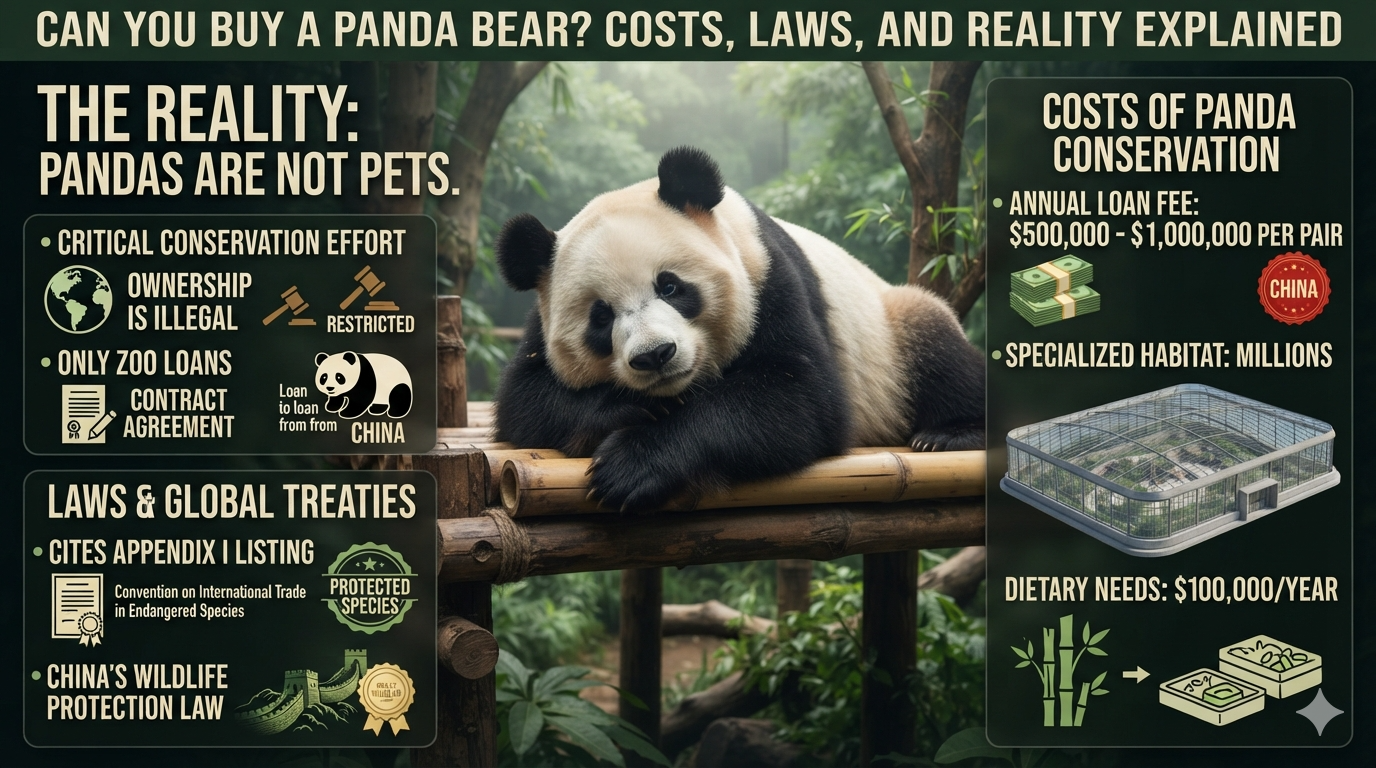
The short and simple answer is a flat no. You cannot legally buy a panda bear as a private pet, no matter how much money you have in your bank account. Giant pandas are classified as a vulnerable species, and they are protected by strict international conservation laws. In almost every country on Earth, keeping a giant panda as a household pet is completely illegal.
These protective measures are in place to ensure the survival of the species. Because their natural wild population is so small, every single living panda is incredibly precious for conservation research. The global scientific community works very hard to protect these animals, meaning they are kept strictly under the care of certified zoological professionals and conservationists rather than private individuals.
Where to Buy a Panda Bear Safely
If you are looking for an official website or a marketplace where to buy a panda bear, you will quickly realize they do not exist. There are no licensed breeders, exotic animal dealers, or legal markets that offer giant pandas to the public. Any website or listing that claims to sell live pandas is a scam designed to steal your money.
Instead of looking for a place to purchase a live bear, animal lovers can redirect their energy toward supporting legitimate wildlife foundations. Organizations like the World Wildlife Fund (WWF) allow you to “adopt” a panda symbolically. This sweet process gives you a cute stuffed toy, an adoption certificate, and the wonderful feeling of knowing your money is actively helping to protect wild pandas in their natural mountain habitats.
Can I Buy a Panda Bear from China?
Some people wonder if they can go straight to the source and buy one directly from Asia. Unfortunately, you still cannot buy a panda bear from China. In fact, the Chinese government actually owns every single giant panda on the planet. Even the adorable pandas you see playing at zoos in the United States, Europe, or other parts of the world are actually on loan from China.
China utilizes a very special program called “Panda Diplomacy”. Through this program, they temporarily lease pairs of giant pandas to international zoos for scientific research and to promote global friendship. These strict contracts ensure that the pandas, and even any cute cubs they might have while abroad, eventually return to China to help continue the breeding program.
How Much Does It Cost to Buy a Panda Bear?
Since you cannot actually purchase one permanently, we have to look at what it costs for a major international zoo to lease them. If you want to know how much does it cost to buy a panda bear for a zoo, the financial numbers are absolutely staggering. A standard lease agreement with the Chinese government typically costs around $1 million per year for a pair of pandas.
On top of that massive annual fee, zoos must sign long-term contracts that usually last at least ten years, instantly bringing the baseline price tag to $10 million. There are also heavy financial penalties if a panda dies due to human error while in a zoo’s care. These high costs ensure that only the most well-funded and highly professional institutions in the world can host them.
The True Cost of Panda Housing and Care
The annual rental fee is only the very beginning of the financial journey. Building a modern, comfortable, and safe enclosure for a pair of giant pandas can easily cost a zoo between $2 million and $5 million. These habitats require heavy-duty air conditioning systems, indoor play areas, secure outdoor climbing structures, and constant temperature monitoring to mimic their cool mountain homes.
Zoos also have to pay for specialized veterinary teams who are highly trained in exotic animal medicine. Because giant pandas have very unique biological needs, they cannot be treated by a normal veterinarian. This highly specialized, round-the-clock medical care costs hundreds of thousands of dollars extra each year, making them some of the most expensive animals on Earth to maintain.
Understanding the Giant Panda Dietary Requirements
If you are still wondering how to buy a panda bear, you must consider their incredibly specific food requirements. Giant pandas eat almost nothing but fresh bamboo. An adult panda needs to consume roughly 20 to 45 pounds of bamboo every single day to get enough nutrients. Because bamboo is not very nutrient-rich, they spend up to 12 hours a day just chewing.
Sourcing that massive amount of fresh, high-quality bamboo is a logistical nightmare for zoos. Many zoos have to import special types of bamboo from distant locations or plant thousands of their own bamboo clumps to keep up with the daily demand. A single panda’s annual food bill can easily exceed $100,000, which is far more than most people spend on their own groceries!
The Wild Temperament of Giant Pandas
It is very easy to look at a panda and think they behave exactly like giant, lazy dogs. However, they are still bears at the end of the day. Giant pandas are naturally solitary wild animals that prefer to live alone. They have incredibly strong jaws and sharp teeth designed for crushing tough bamboo stalks, which means they can easily cause severe injuries if they feel threatened or annoyed.
Unlike dogs or cats, pandas have absolutely no desire to cuddle with humans or please their owners. They do not respond to training commands, and they generally prefer to be left completely alone in their space. Trying to raise one in a household environment would be incredibly dangerous for both the human family and the bear itself.
How to Help Giant Pandas Without Owning One
Just because you cannot have a fluffy bear running around your living room does not mean you cannot be a major part of their lives. There are plenty of wonderful, active ways to support giant pandas. You can visit accredited zoos that participate in the panda loan program, as a portion of your ticket price goes directly toward global conservation and habitat restoration funds.
Another fantastic option is to share educational information with your friends and family online. By raising awareness about the challenges pandas face in the wild—like habitat loss, climate change, and forest fragmentation—you are helping to build a brighter, safer future for these beautiful animals. Education is one of the most powerful tools we have in the fight to save wildlife!
Forbes-Style Panda Conservation & Care Capitalization
This detailed overview outlines the massive capital, operational, and regulatory frameworks required by major international institutions to host giant pandas.
| Financial Category | Estimated Cost (USD) | Contractual Commitment | Primary Purpose |
| Annual Lease Fee | $1,000,000 / year | 10-Year Standard | Paid to China for wild habitat conservation funding. |
| Habitat Construction | $2,000,000 – $5,000,000 | One-time Upfront | High-tech temperature control and enrichment structures. |
| Annual Dietary Supply | $100,000+ / year | Ongoing Daily | Sourcing 20-45 lbs of fresh bamboo per day per bear. |
| Specialized Veterinary Care | $150,000+ / year | Ongoing | 24/7 care by exotic mammal health professionals. |
| Newborn Cub “Tax” | $400,000 – $600,000 | Per Successful Birth | One-time fee paid to China; cub returns to China at age 2-3. |
Conclusion
At the end of the day, our love for giant pandas should be focused on keeping them safe, healthy, and free. While the dream of trying to buy a panda bear is incredibly popular, the reality is that these beautiful bears belong in the peaceful bamboo forests of China. The strict laws, massive financial costs, and intense daily care requirements make them entirely unsuited for private pet life.
By supporting international conservation programs, visiting them at accredited public zoos, and choosing cute plush toys instead of real exotic animals, we can celebrate pandas in a way that respects their wild nature. Let’s continue to admire these wonderful, clumsy giants from a safe distance and work together to keep their mountain habitats green for generations to come!
Frequently Asked Questions
Can you buy a panda bear as a pet anywhere in the world?
No, it is completely illegal to buy a giant panda bear as a private pet anywhere in the world. They are heavily protected by global wildlife protection treaties, and they can only be cared for by licensed conservation facilities and zoos.
Where can I buy a panda bear plush toy or adopt one symbolically?
You can easily “adopt” a panda symbolically through official wildlife charities like the World Wildlife Fund (WWF). This sweet program provides you with a soft plush toy, an adoption kit, and directly funds real-world panda conservation efforts.
How much does it cost for a zoo to host a giant panda?
A zoo must pay China an annual lease fee of around $1 million to host a pair of pandas. When you add the massive costs of building a high-tech habitat, buying fresh bamboo daily, and hiring specialized vets, the total cost can easily top $2 million a year.
Can you own a red panda instead of a giant panda?
No, you cannot keep a red panda as a pet either. Even though they are much smaller and look a bit like raccoons, red pandas are also an endangered species protected by international law, making private ownership highly illegal.
Do giant pandas ever get aggressive?
Yes, giant pandas can be very dangerous when provoked. They are incredibly strong wild bears with massive jaw muscles and long claws designed for tearing apart tough bamboo. They can easily defend themselves if they feel crowded or threatened.
Why does China own all of the giant pandas?
China claims historical ownership of giant pandas because the species is completely native to their mountainous forests. They use their unique panda loan program to help fund wildlife sanctuaries and support global scientific research.